
Why do traditional social listening tools fall short?
Text-only tools miss what a video actually says
Legacy tools were built for text. They can't read tone, facial reaction, or sentiment inside video, where most cultural meaning now lives.
They can't track how narratives actually spread
Viral moments spread through video reactions, stitches, and duets. Text-based social monitoring tools miss this context and the emotional signal that makes a trend meaningful.
They induce manual work
When your social listening tool can't keep up, teams fall back on manual screenshots and spreadsheets. By the time insights reach decision-makers, the moment has already passed.
That’s why we created dig.
to help you decode what happens on social and turn it into explainable, traceable insights in real time.
Video-first architecture
Most tools are designed with video as an afterthought. dig was designed for video as the core data layer, and for analyzing the visual content, sentiment, and narrative in real time.
Total brand visibility
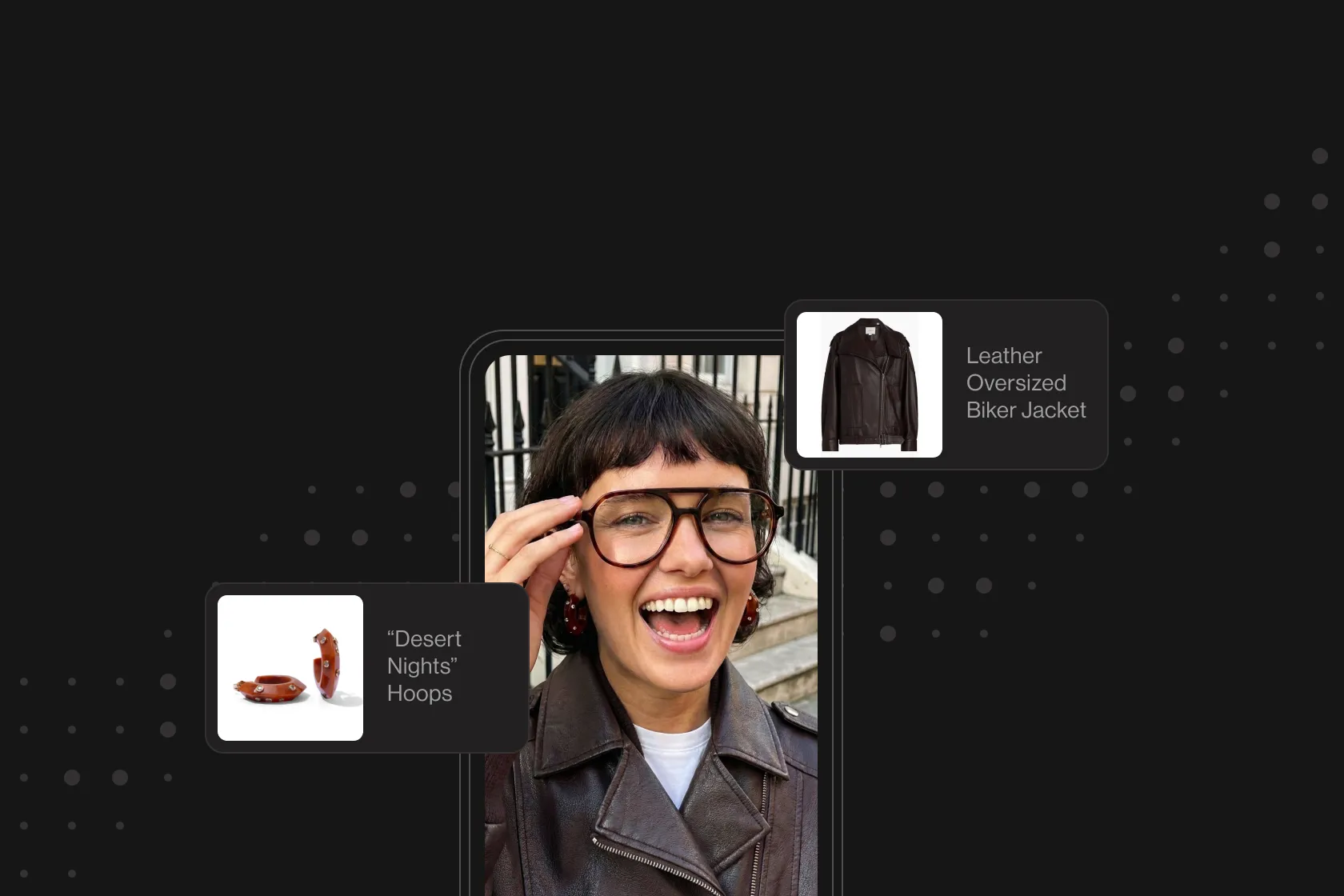
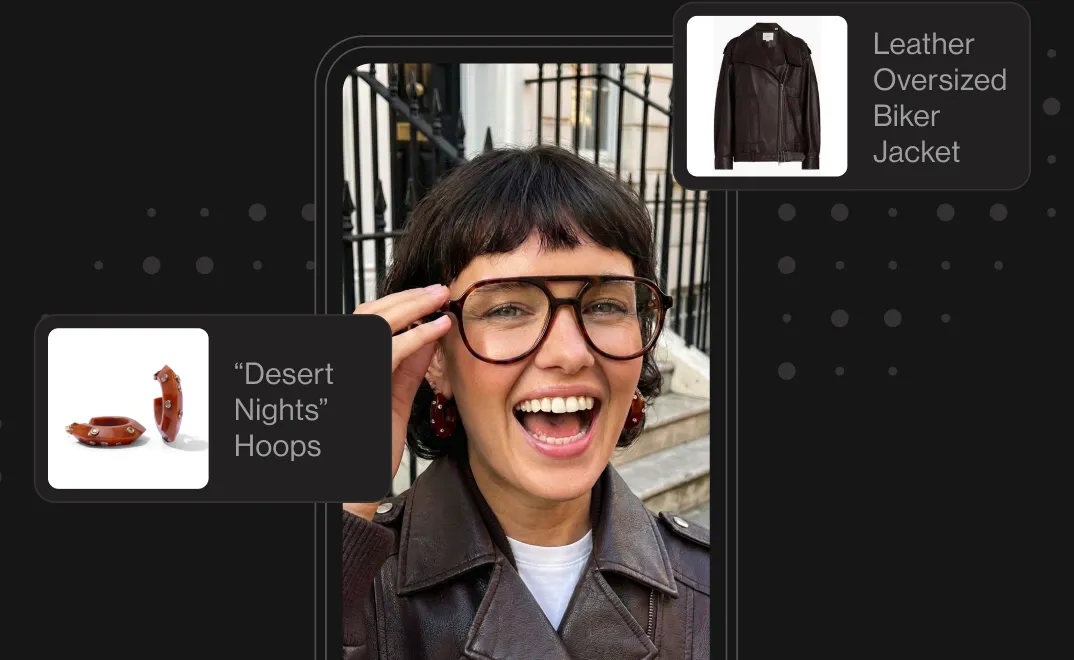
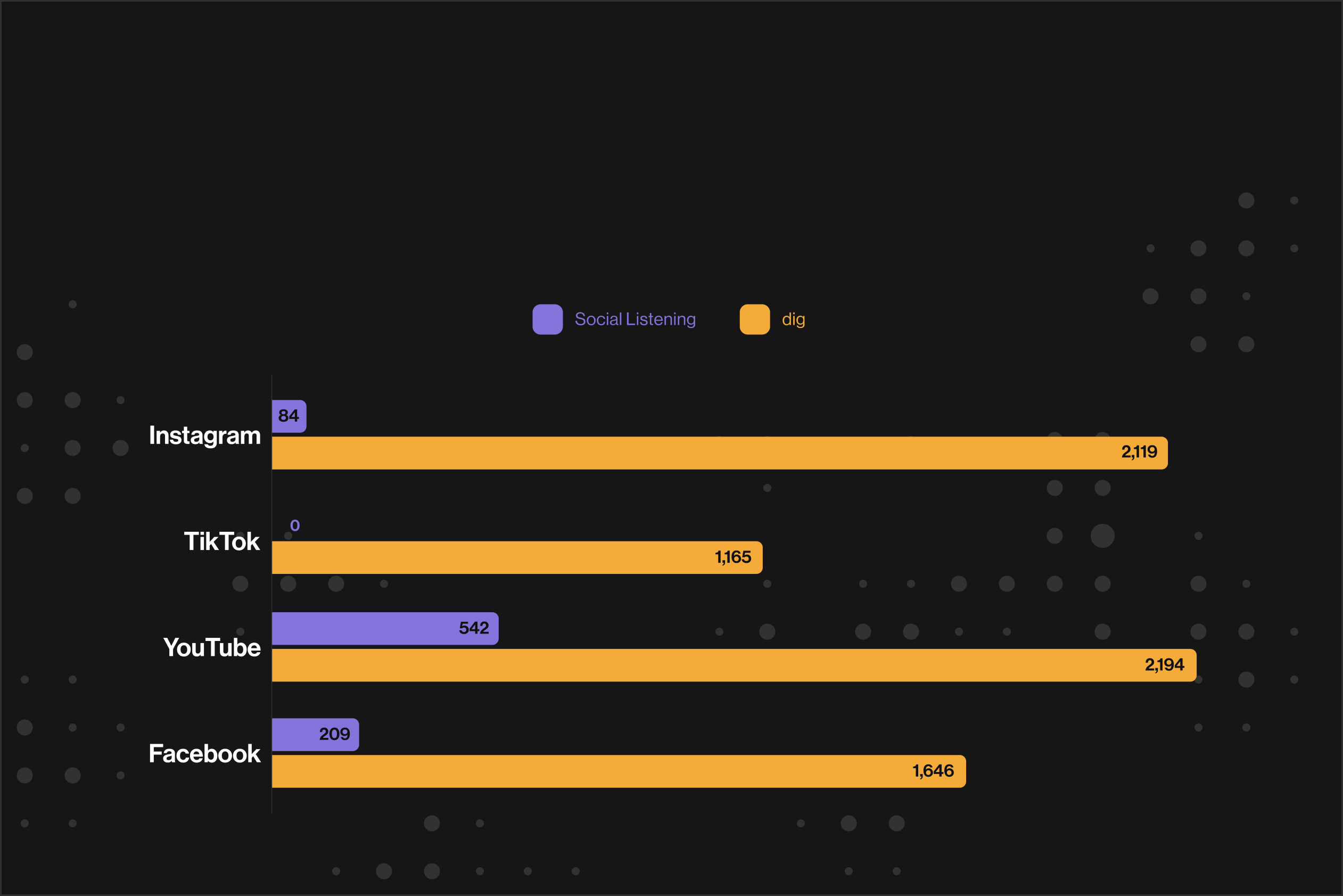
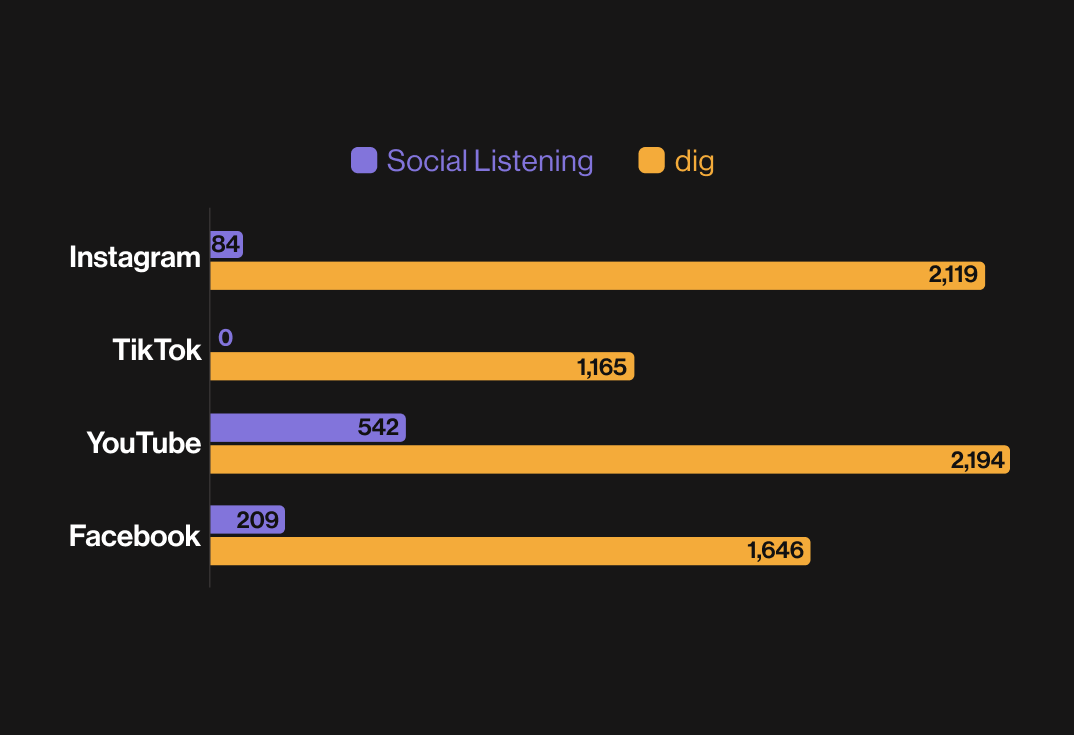
dig finds over 90% of all relevant brand mentions across every social platform, even when your brand isn't named. No blind spots or missed moments.
Real-time narrative intelligence
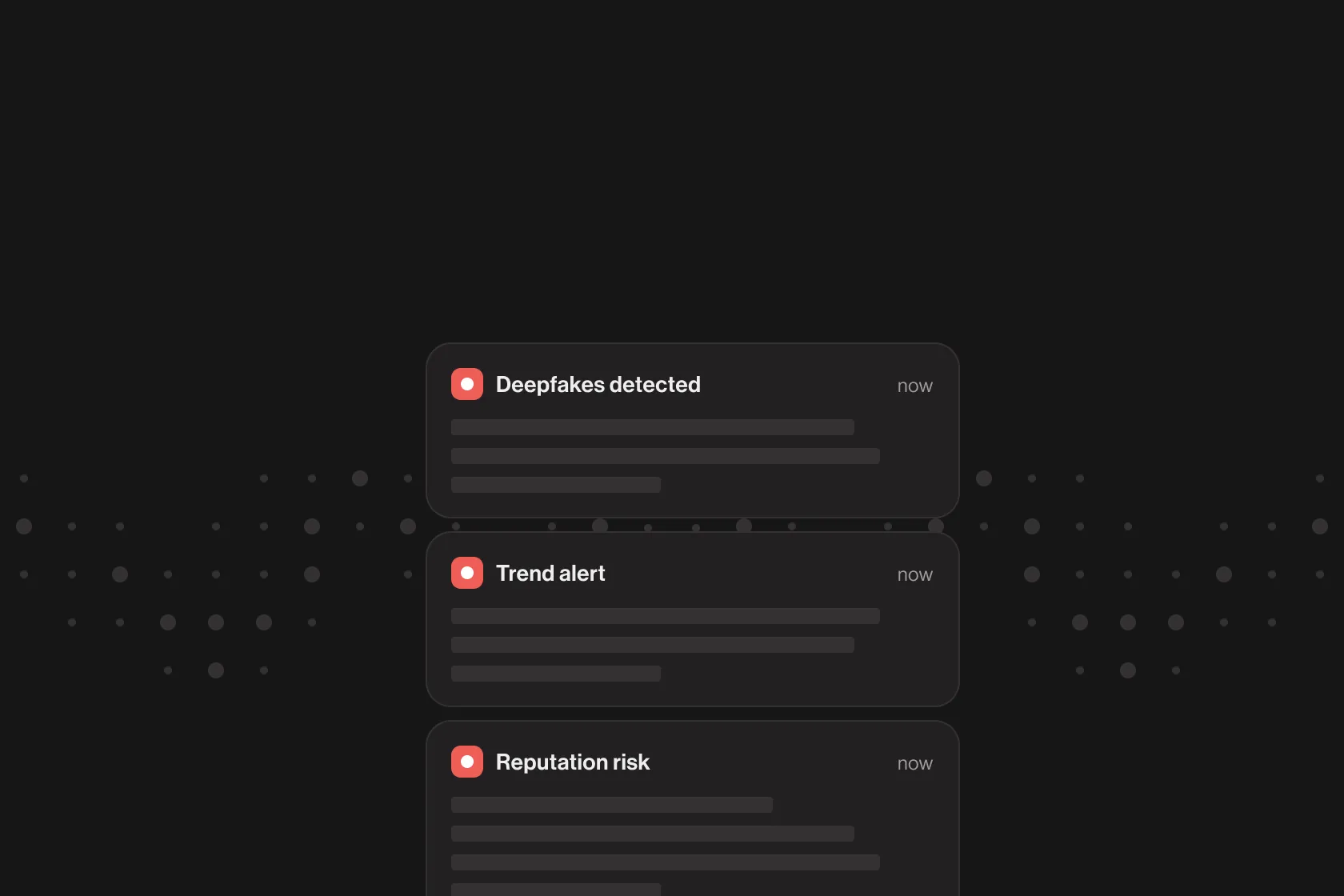
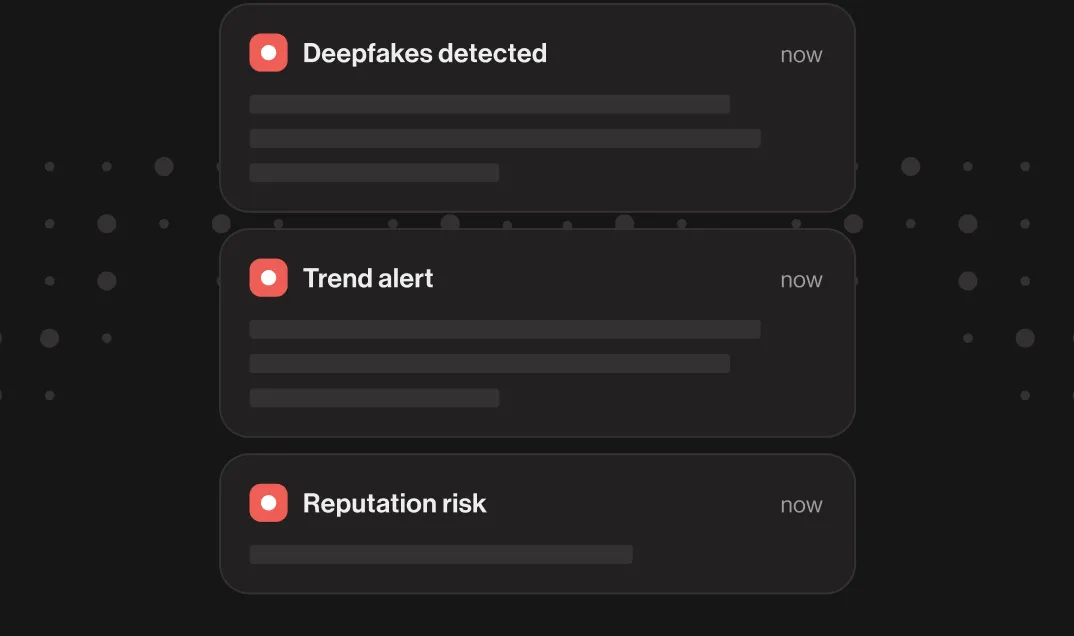
dig detects deepfakes, coordinated narrative attacks, and brand reputation risks as they form, not after they've spread. You get the early warning when it still matters.
Traceable and defensible insights
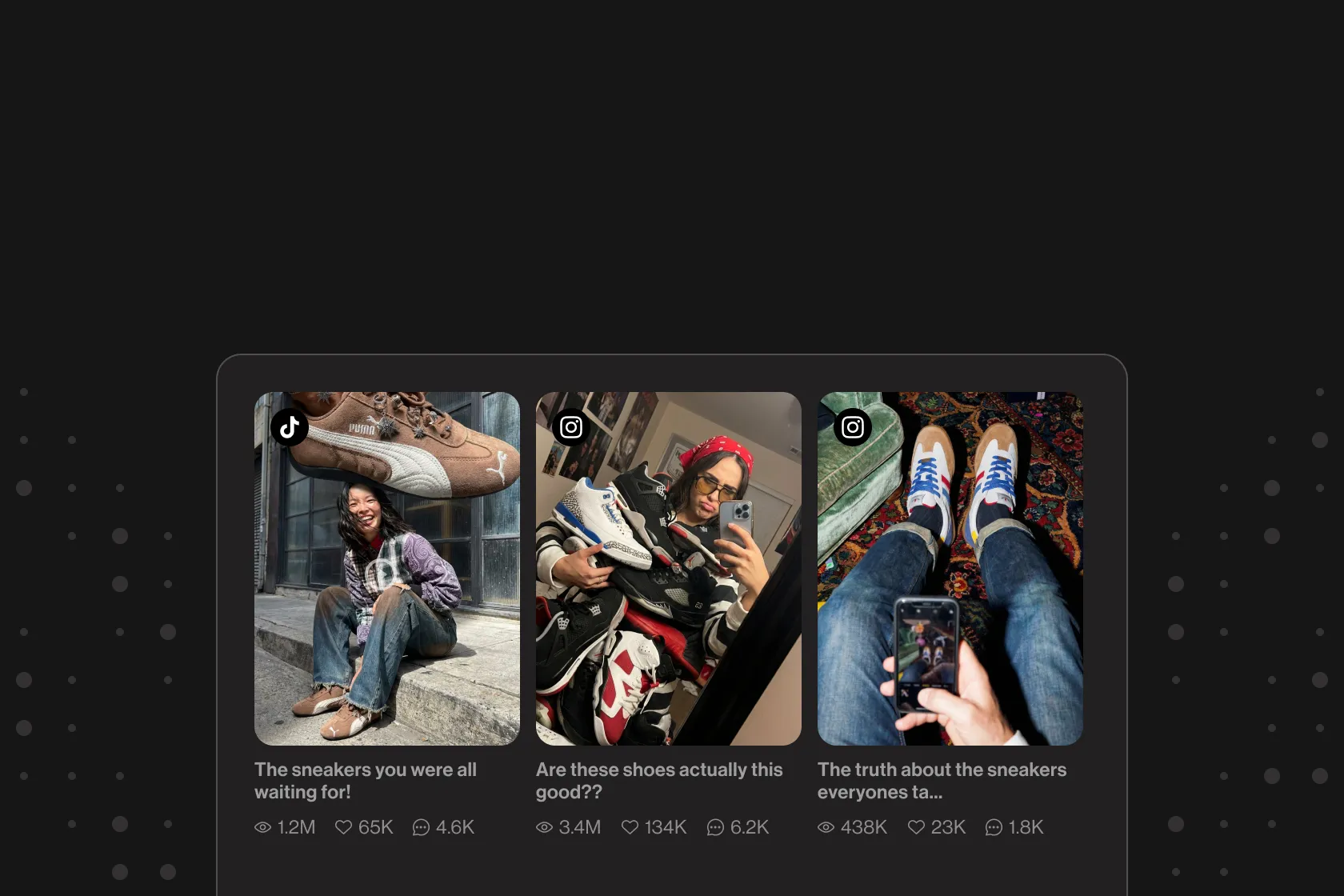
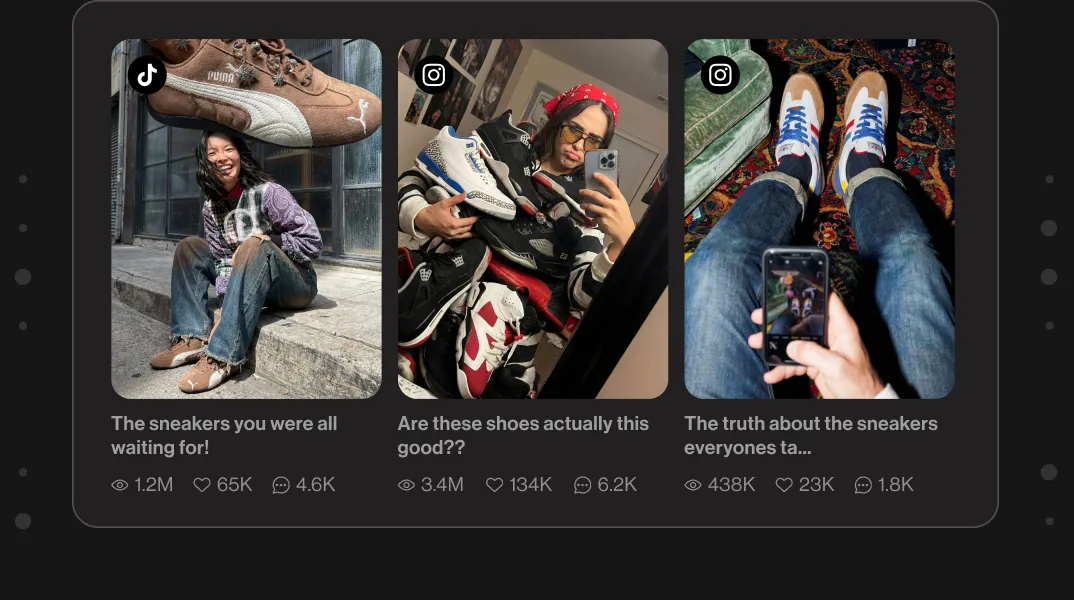
Every insight dig finds is linked directly to the original video. Watch the source, verify the context, and defend high-stakes decisions with evidence that leadership can trust.
Enterprise-scale social intelligence
dig monitors billions of posts across languages, platforms, and regions. It delivers a level of in-video intelligence that agencies, LLMs, and legacy social listening tools simply cannot match.
dig vs. traditional social listening tools
Features
Legacy Tools
Manual search
Agencies
LLMs
Video understanding
Native
Captions only
Limited
Surface-level
Anecdotal
Unmatched coverage
90%+
Limited
Limited
Limited
Only indexed pages
Narrative analysis
Structural
Keywords & texts
Biased
Retrospective
Hallucinates
Traceability
100%
Limited
Limited
Opaque
Unreliable
Time to insight
Minutes
Weeks
Days
Months
Instant but unreliable
Scalability
Global Scale
None
None
None
None
Research depth
Deep + Systematic
Partial
Partial
Partial & Cost-bound
Anecdotal
From guesswork to ground work
With 90%+ social coverage, dig is the only social media listening tool built to give you a real, defensible view of what's happening inside social video. Use dig when your brand decisions can't afford a blind spot.

Got questions about dig’s social listening platform?
We’ve got answers.
In one word: video.
Traditional social listening tools analyze text around the video: descriptions, captions, comments, hashtags.
dig analyzes what’s inside the video: visuals, speech, tone, scenes, objects, emotions, and narrative structure.
With dig, you can tell whether something is sarcasm or praise, whether the product is actually shown on screen or merely mentioned in text, and whether sentiment is positive or negative inside the video itself.
dig’s in-video analysis runs at 95% accuracy across speech, visuals, emotion, and narrative classification.
That accuracy is measured against labeled datasets and continuously improved with human-in-the-loop evaluation.
Every insight is traceable to the original video, so teams can verify exactly what the digger (the dig engine) detected.
dig analyzes 90%+ of social video across major platforms, including TikTok, YouTube, Instagram, Reddit, X, and Facebook.
This is not sampling. It’s continuous, large-scale in-depth analysis of billions of posts in real time.
LLMs summarize language, but they can’t do the same for video content. They don’t see visuals and can’t catch gestures, edits, or on-screen context
They also can’t interpret irony, reaction formats, or visual storytelling - and they sometimes hallucinate patterns without access to underlying video data.
dig is not a text model guessing about video.
It analyzes the video itself and produces insights grounded in actual footage: clickable, reviewable, and defensible - so you can make high-stakes decisions.
The short answer is MINUTES.
Once you start, you can search in natural language, explore live narratives and run deep research flows in the dig chatbot and get your answers in minutes.
Most teams are up and running in under three (3) hours. No Boolean query setup, no taxonomy building and no manual tagging needed.
- Brand & consumer insights teams - for culture, perception, creative direction, and trend analysis.
- CMOs and strategy leaders - for positioning, risk, and studying the market.
- Comms & PR teams - for crisis detection, reputation, misinformation, and narrative tracking.
- Agencies - for client pitch, influencer vetting, and full campaign analysis.
- Research and analytics teams - for qualitative market and consumer research at scale, without manual coding.
- Public sector and institutional teams - for public sentiment tracking, disinformation, threat detection, policy narratives, and trust monitoring across social platforms.
This isn’t faster research. It is social intelligence.
Manual video research:
- Is slow (takes weeks to months)
- Covers a fraction of what’s actually happening
- Biased by what analysts chose to watch
- Can’t be reproduced or audited at scale
dig:
- Analyzes billions of videos in real time
- Surfaces patterns that can’t be tracked manually
- Produces traceable, source-linked insights
- Eliminates the human bottleneck
For any narrative, trend, or claim, you just click through to the exact posts behind it. You can see which creators drove it, understand how it spread and verify the context - in minutes.
dig's narrative intelligence detects:
- Deepfakes and manipulated content
- Counterfeit products and brand misuse
- Misinformation and harmful narratives
- Off-brand or risky creators / influencers
- Emerging negative issues before they scale
dig analyzes what is shown and said inside the video, not just the caption - and that’s why it can detect threats that text-based systems fail to catch.
Most teams understand what they’re missing when they research their own category, brand, or audience with dig.
In a demo, you’ll see for yourself:
- How narratives actually appear inside video
- How insights link directly to real social videos
- How quickly you can go from question → evidence → to decision
If your decisions depend on data - watching in-video intelligence form in real time is a game changer.